
FMX vs. Panoramic X-Rays: Why Insurance Won't Pay for Both (D0210 vs. D0330)
Nearly every general dentist takes one of these two images on a new patient, and most dental plans will reimburse only one of them within a set period. That one rule causes more denials and downgrades of diagnostic imaging than anything else about radiographs. The practice usually finds out when a patient questions a bill or a claim comes back paid at a lower rate than anyone expected, and occasionally it surfaces as an unbundling flag against an office that intended nothing improper.
What are D0210 and D0330?
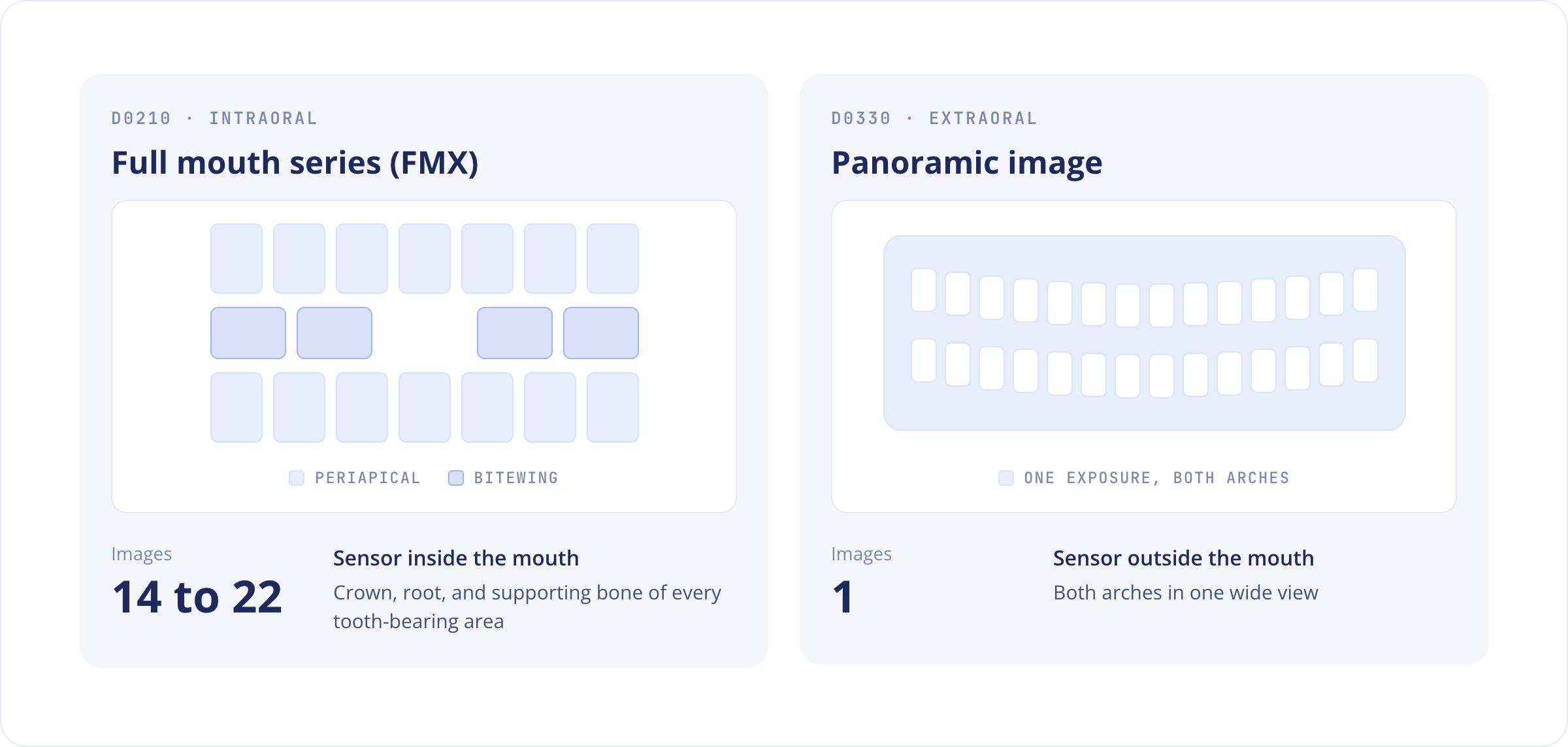
D0210 is the intraoral comprehensive series of radiographic images, better known as a full mouth series or FMX: usually 14 to 22 individual periapical and bitewing images, taken with the sensor inside the mouth, that capture the crown, root, and supporting bone of every tooth-bearing area.
D0330 is a panoramic radiographic image, a single extraoral exposure taken with the sensor outside the mouth that shows both arches in one wide view.
For billing, the line is intraoral versus extraoral. Reporting one as the other, or counting a panoramic image toward an intraoral series, misreports what was done, and carriers treat it that way.
Why most plans will not pay for both
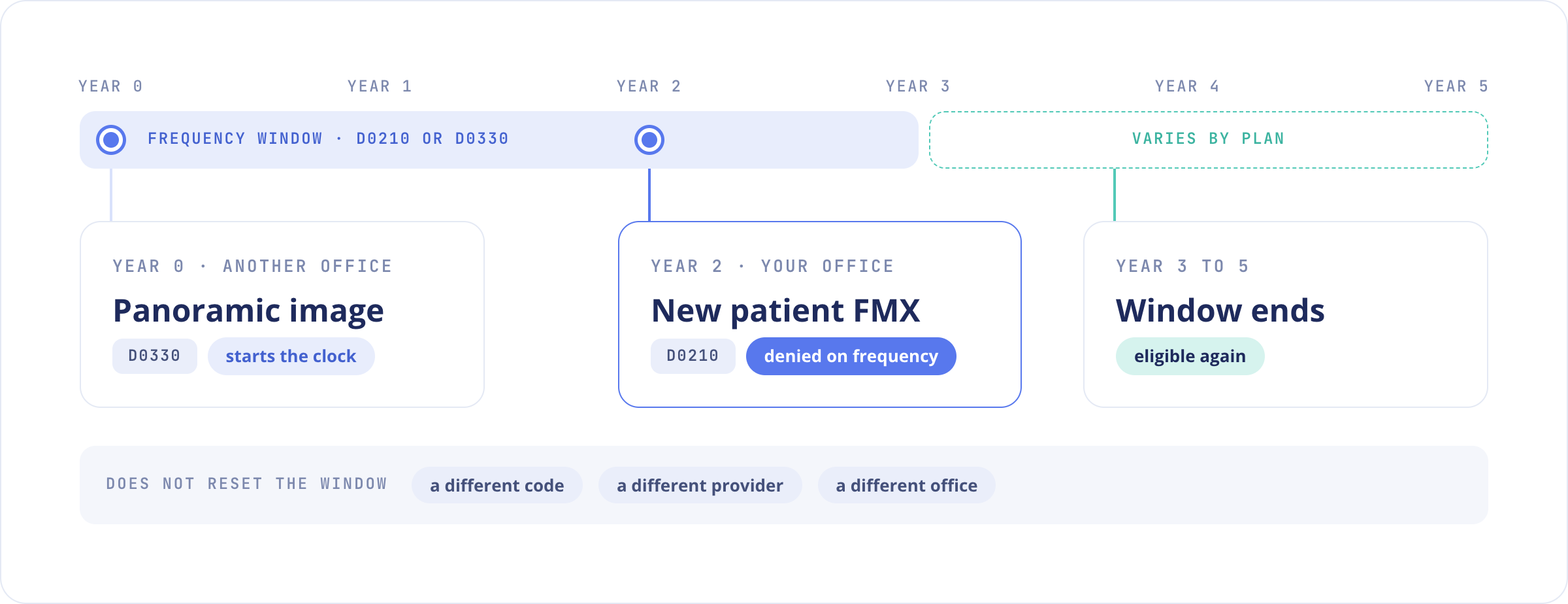
D0210 and D0330 are different procedures. To most plans they serve the same purpose, a comprehensive baseline view of the dentition, so only one of them is reimbursed. The usual plan language reads something like "D0210 or D0330, but not both, once every three to five years." That is a frequency limitation, a cap on how often a service is covered, and it applies regardless of which code was used or how many individual images were captured.
The limit follows the patient, which is where practices get caught. A different code does not reset it, and neither does a different provider or office. A patient who had a panoramic image somewhere else two years ago can walk in needing a routine FMX, and that claim will deny on frequency even though the imaging was clinically appropriate. A panoramic image taken for a child or an anxious patient works the same way. It is a legitimate clinical choice, but it uses the same frequency window as an FMX, so it does not buy the practice a second reimbursement later that year.
Why these claims get downgraded: the bitewing bundling trap
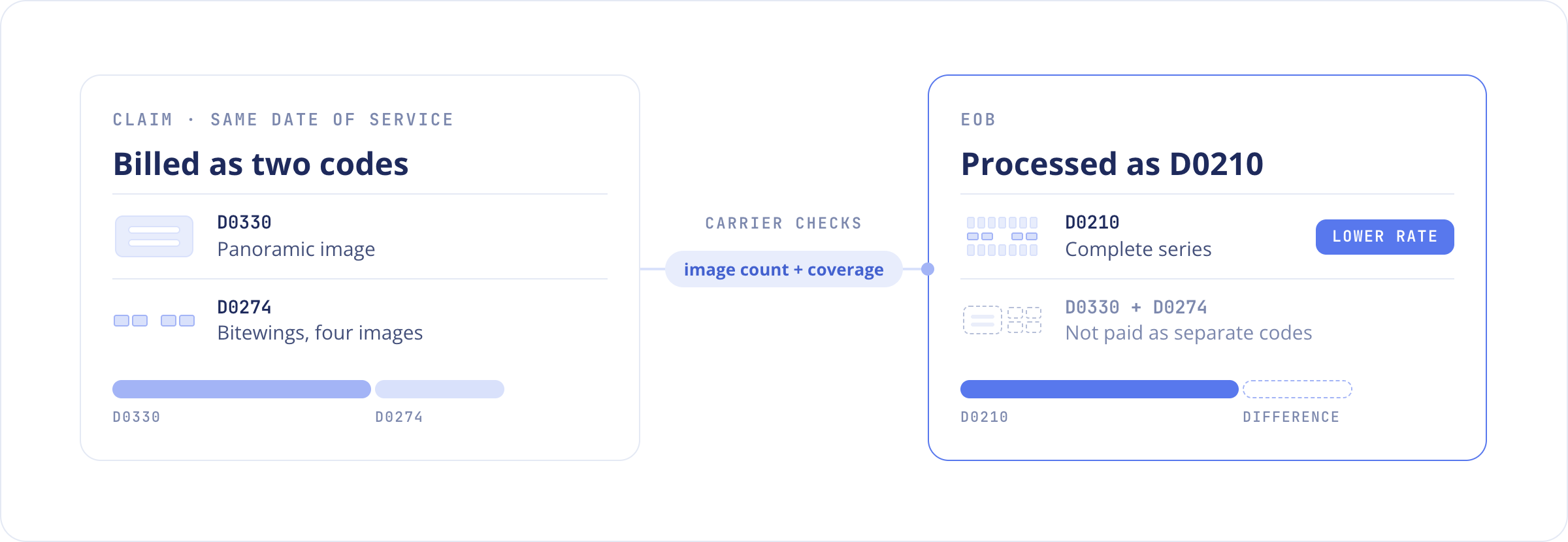
The most common way practices lose money on this pair is taking a panoramic image and a set of bitewings on the same date, then billing them as two separate, smaller procedures. (D0272 covers two bitewing images and D0274 covers four.) Most plans define a complete series by image count and coverage, whatever codes were used to get there. If a panoramic image plus four bitewings meets what the plan considers a complete radiographic survey, many payers process the combination at the D0210 allowance instead of paying the two codes separately.
This is a downgrade: the payer remaps the claim to a lower-paying code. Unbundling is different, since that is when a practice deliberately splits one procedure into pieces to inflate reimbursement, and most offices caught by the remap did nothing of the kind. They did not know that taking the two images on the same date triggers it. The images the patient needs should still be taken. The practice just has to know going in that the combination will likely pay at the lower rate, and set the patient's portion before treatment instead of arguing about it after the EOB (explanation of benefits) arrives.
The one exception worth knowing
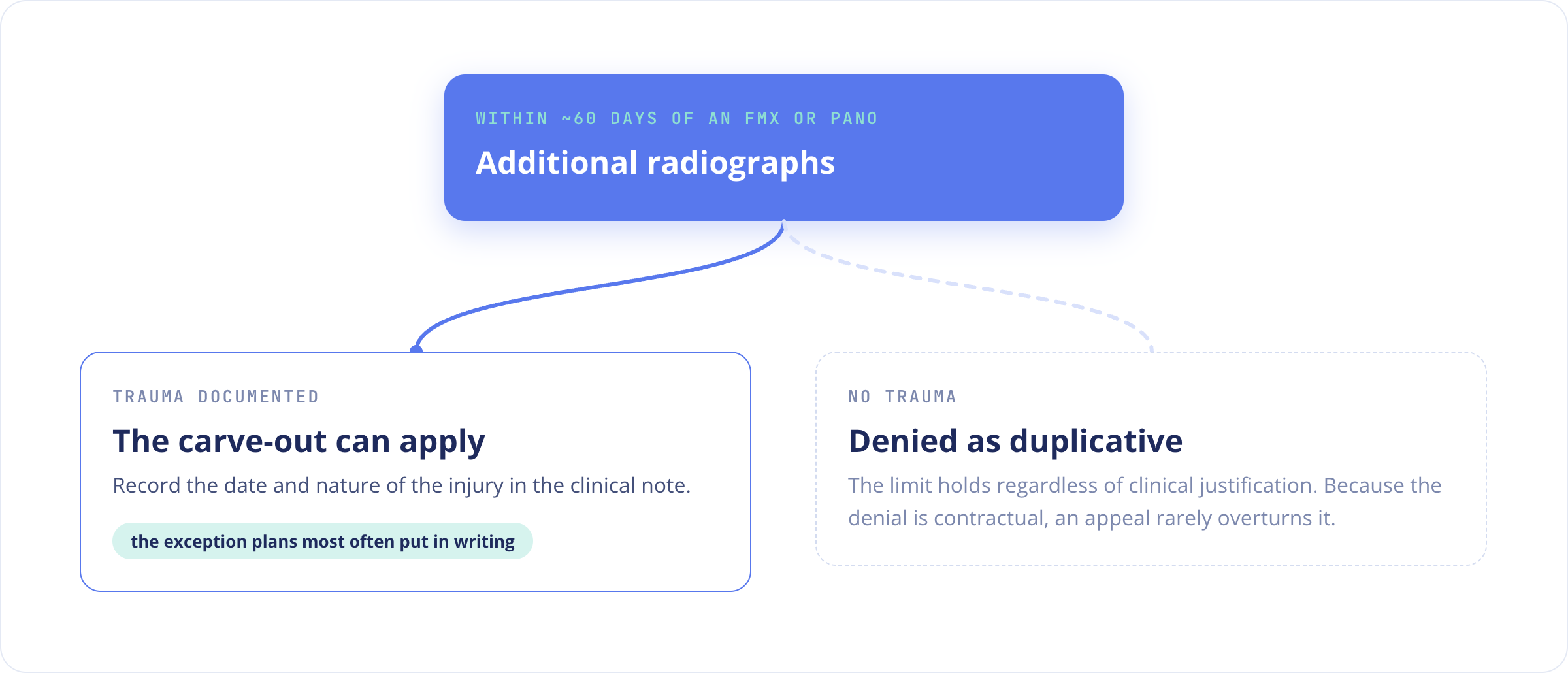
Additional radiographs taken shortly after a recent full series or panoramic image, within roughly 60 days under some plans, are typically denied as duplicative unless there is evidence of trauma. Trauma is the carve-out plans most often put in writing. Without it, the frequency limit holds regardless of clinical justification, and since the denial is contractual, it rarely gets overturned on appeal.
How to improve claim acceptance
The frequency edit is date-driven, with no clinical review, so the documentation that protects this claim is different from what supports a restorative or periodontal claim. It has to exist before the images are taken, because a narrative written afterward rarely helps.
- Ask about prior radiographs first: Ask every new patient when and where their last FMX or panoramic image was taken, and chart the answer before taking either one. That one question prevents more denials on this code pair than any narrative written after the fact.
- Treat D0210 and D0330 as one frequency window: A patient who had one of these images two years ago is not eligible for the other just because the code is different.
- Expect the remap: When a panoramic image and bitewings are taken on the same date, set the patient estimate as though the payer will process them as a complete series.
- Document trauma: If an injury is the reason for imaging inside the standard window, record the date and nature of the trauma in the clinical note.
- Code what was taken: Do not upgrade to D0210 to head off a downgrade, and do not skip clinically necessary imaging to dodge a frequency limit. A panoramic image with bitewings is still D0330 with D0272 through D0274, and the payer's own bundling logic will set the rate.
Final Thoughts
None of this requires a different clinical decision about which images to take. It requires knowing, before the appointment, whether the patient has already used the frequency window on either code, and documenting the trauma exception when it applies. Most of that work sits with the front desk, and it is the difference between a clean claim and a denial that was never really in dispute.
If your practice wants support with dental insurance billing, Dentalogic can help ensure claims are submitted accurately and followed through to payment.
Note: This information is current as of October 2026. CDT guidelines and carrier policies change, so always consult the latest ADA Current Dental Terminology manual and payer-specific requirements before submitting claims. This article is for informational purposes only and does not constitute professional billing or clinical advice.