D4910 is the code for the ongoing hygiene visits a patient needs after periodontal therapy, and carriers frequently deny it or pay it at a lower rate, often because the plan limits periodontal benefits even when the claim is correct. Knowing how payers apply it protects the revenue from every recall visit that follows scaling and root planing.
What is D4910?
D4910 is the CDT code for periodontal maintenance. Its descriptor says the procedure begins after periodontal therapy and continues at intervals the dentist sets through clinical evaluation, for the life of the dentition or any implant replacements. The visit includes removing plaque and calculus above and below the gumline, site-specific scaling and root planing where needed, and polishing.
Periodontal therapy here means active treatment, either nonsurgical, such as scaling and root planing reported with D4341 or D4342, or surgical, such as osseous surgery.
How D4910 differs from D1110 and D4346
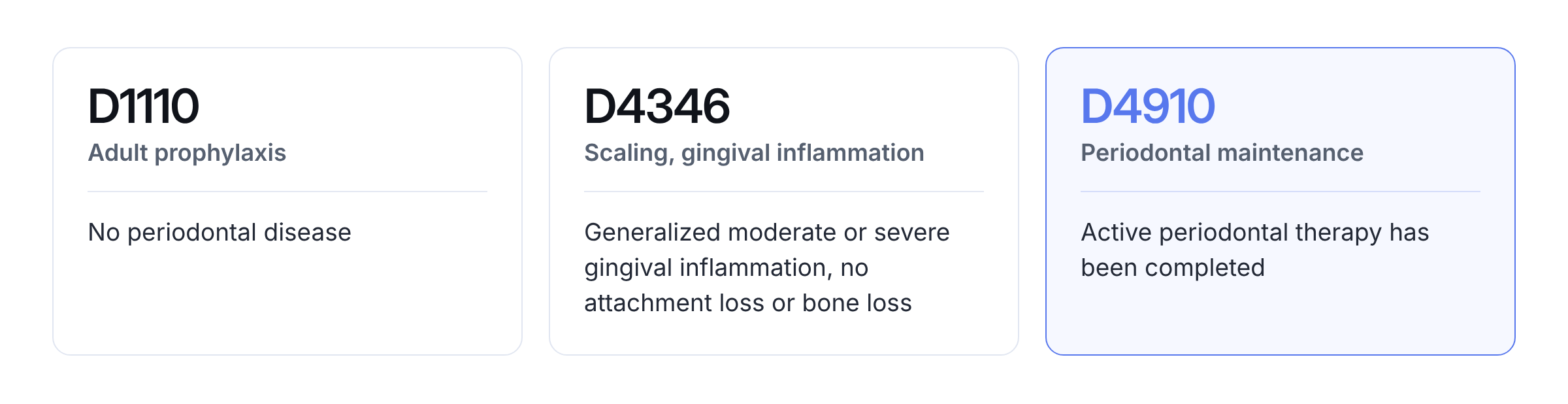
D1110 is a preventive cleaning for a patient without periodontal disease. D4346 covers scaling for generalized moderate or severe gingival inflammation in a patient with no attachment loss or bone loss. D4910 applies once active periodontal therapy has been completed, so the patient's treatment history is what points to the code. Whether a treated patient can later return to D1110 is a matter of clinical judgment for the treating dentist, and the chart should record that reasoning.
When is D4910 covered?
The CDT descriptor sets no waiting period after therapy, so carriers apply their own rules:
- Waiting period after therapy: Most payers require 8 to 12 weeks between active therapy and the first D4910 they will pay.
- Prior therapy requirements: Some payers deny D4910 unless two or more quadrants have received prior therapy.
- Frequency limits: Payment frequency varies widely by carrier. Many plans that cover D4910 allow two visits a year, while maintenance patients are often scheduled every three or four months.
- History on file: The carrier often cannot see the patient's periodontal history when the claim is processed, especially after a change in plans.

Why D4910 is denied or paid at a lower rate
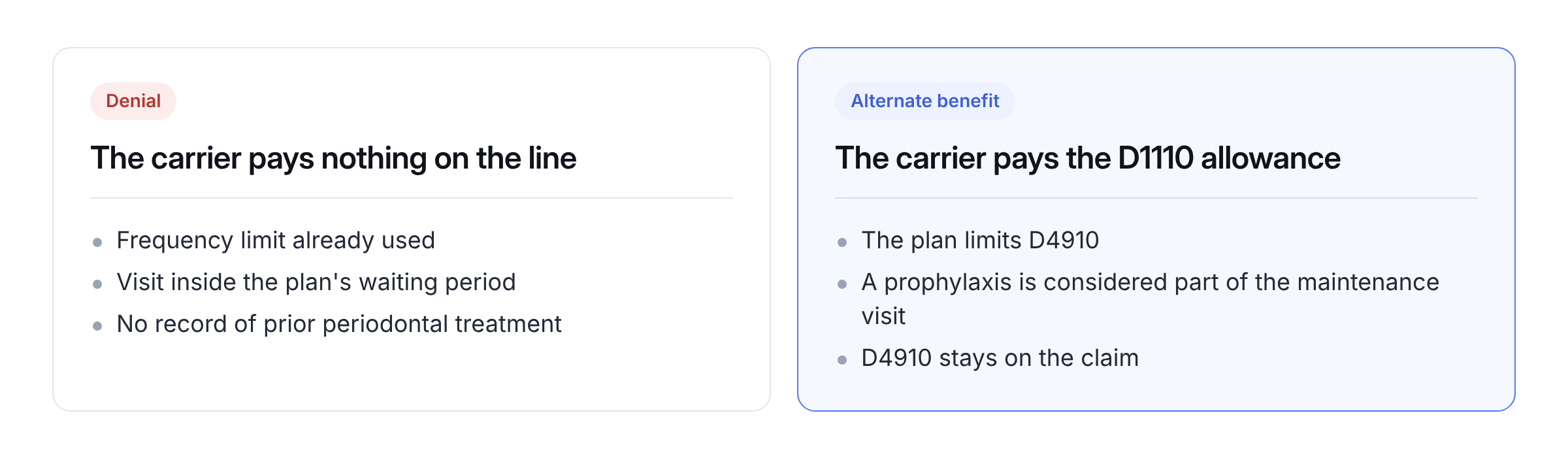
A denial means the carrier paid nothing on the line, usually because the frequency limit was already used, the visit fell inside the plan's waiting period, or there was no record of prior periodontal treatment. Missing history can usually be resolved with documentation. A frequency limit is written into the plan, so an appeal is unlikely to change it.
An alternate benefit works differently. When a plan limits D4910, many carriers will pay the adult prophylaxis allowance instead, since a prophylaxis is considered part of the maintenance visit. Whether the patient owes the difference depends on the plan and your participation agreement.
How to improve D4910 claim acceptance
- Verify maintenance benefits before the visit: Confirm the D4910 frequency, any waiting period after therapy, and whether the plan offers a D1110 alternate benefit once maintenance visits run out.
- Send history with the first claim to a new carrier: Include the dates and quadrants of prior therapy with current periodontal charting. Many payers also expect an exam, periodontal probing, and a periodontal diagnosis to support D4910.
- Request the alternate benefit in the claim remarks: A note such as "If D4910 benefits are not available, please consider an alternate benefit of D1110" asks the carrier to pay the prophylaxis allowance. D4910 stays on the claim when it is the procedure performed.
- Document unusual intervals: When clinical need calls for a schedule outside the plan's rules, record the reason and send it with the original claim.
- Set patient expectations early: Explain that the plan may cover fewer maintenance visits than the dentist recommends, or pay some at the prophylaxis rate.
Final Thoughts
Most D4910 problems come down to history and timing. The carrier needs to see that active therapy happened, that enough time has passed, and that the visit fits the plan's frequency. When those details are verified up front and documented on the claim, what remains is usually a benefit limit the practice can plan around.
If your practice wants support with dental insurance billing, Dentalogic can help ensure claims are submitted accurately and followed through to payment.
Note: This information is current as of November 2026. CDT guidelines and carrier policies change, so always consult the latest ADA Current Dental Terminology manual and payer-specific requirements before submitting claims. This article is for informational purposes only and does not constitute professional billing or clinical advice.